Digital Audio Mixer Pt.2
페이지 정보
작성자 Mario 댓글 0건 조회 2회 작성일 26-06-11 17:48본문
 This information will present you the way to configure the HA database and HA-IP and I'll also setup longhorn for top-out there block storage inside kubernetes. In k3s, by default, volumes use local storage, that means that if a node goes down, the quantity is not accessible on the opposite node where the pods will start up once more. We will analyze both in terms of the load of a single participant on the community but additionally when it comes to the quantity of community traffic as a whole. By the way in which, I had anticipated in my previous blogpost that we'd see the house internet hosting requirements for Bluesky's public community to double within the month. Overall I believe this is a pretty moderately set of objectives and you can see why they'd inform the design of Bluesky significantly. It's designed to ensure "credible exit", adversarial interop, and different properties, for every part of the overall system. QST is Intel's proprietary system for implementing PWM fan management - though awesome on paper, it is terrible in implementation. Well, that could be Toshiba's or Lenovo's approach, but certainly not Intel's.
 You cannot know information unless it is instructed to you (properly, except you'll be able to infer it, however that is not relevant for this case). The end result's that I can pull the facility from any two of the three nodes without the k3s cluster or workloads going down. Any Persistent Volumes in you kubernetes cluster are replicated over all three nodes together with automated failover. My k3s cluster now has four nodes, however one in all them is only a worker node, not part of the excessive-accessible control plane setup, so technically, the excessive-out there cluster makes use of 3 nodes. I'm also using it as a LoadBalancer to make services accessible within the cluster from the surface. 1.8TB (weirdly sufficient, that's not even the MBR restrict), so utilizing a RAID-1 on this config could be as effective as staying with my previous HDD. But even they might innovate out of a garage by making use of their considerable smarts to existing applied sciences you might buy roughly off the shelf. All of that may cost round 500-600PLN (130-150USD), and I would nonetheless must upgrade my exhausting drive, as my then-current 2TB WD drive was slowly operating out of area. The cost of working a full-network, fully archiving relay has increased over time.
At the start, it was a Raspberry Pi 1B working a poorly configured nginx and sshd to permit transferring recordsdata over SFTP. One lenghty journey down the Wayback Machine later showed that my motherboard was truly running the latest BIOS, but I wasted round an hour simply to confirm that - not to say discovering proper information if I'd ever need these. Because it prices you subsequent to nothing to only host those recordsdata infinitely (you need a webpage anyways, and storage isn't that costly anymore), you can just make your legacy customers blissful and never delete content as "someone may need it later". Now, think about that you're a hardware manufacturer, and you host essential information to your prospects to download, reminiscent of BIOS updates and drivers. Linux drivers stopped working around kernel 4.14, and I'd must port those to the most recent kernel or live with 100% fan usage all the time.
My fix for the RAID drawback was to only use the Linux Software RAID, as with RAID-1 there's just about no performance penalty. Speaking of RAID, here's a humorous story: to my surprise, this Intel Desktop Board helps some sort of hardware RAID - not one thing you generally see on older client boards. To make issues less complicated, I installed the OS on a boot SSD that I've had laying round - this way if any of my knowledge drives fail, I do not need to worry about not being able to simply boot and get better the RAID. You don’t want this device if you’re going to be experimenting with a Raspberry Pi, as a result of it will possibly only boot from an SD card. There is a common ring between Mark and Bryan's articles: centralization really offers quite a lot of options we wish, and we do not wish to lose those, and it should happen anyway, so what's actually necessary is that customers have the flexibility to maneuver away.
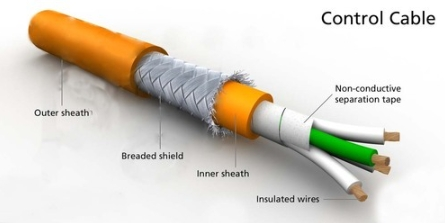
If you liked this write-up and you would such as to receive more info relating to control cable kindly visit the web page.
- 이전글Did You Start Anime Slots Codes Update 2 For Passion or Money? 26.06.11
- 다음글digital marketing agency 26.06.11
댓글목록
등록된 댓글이 없습니다.